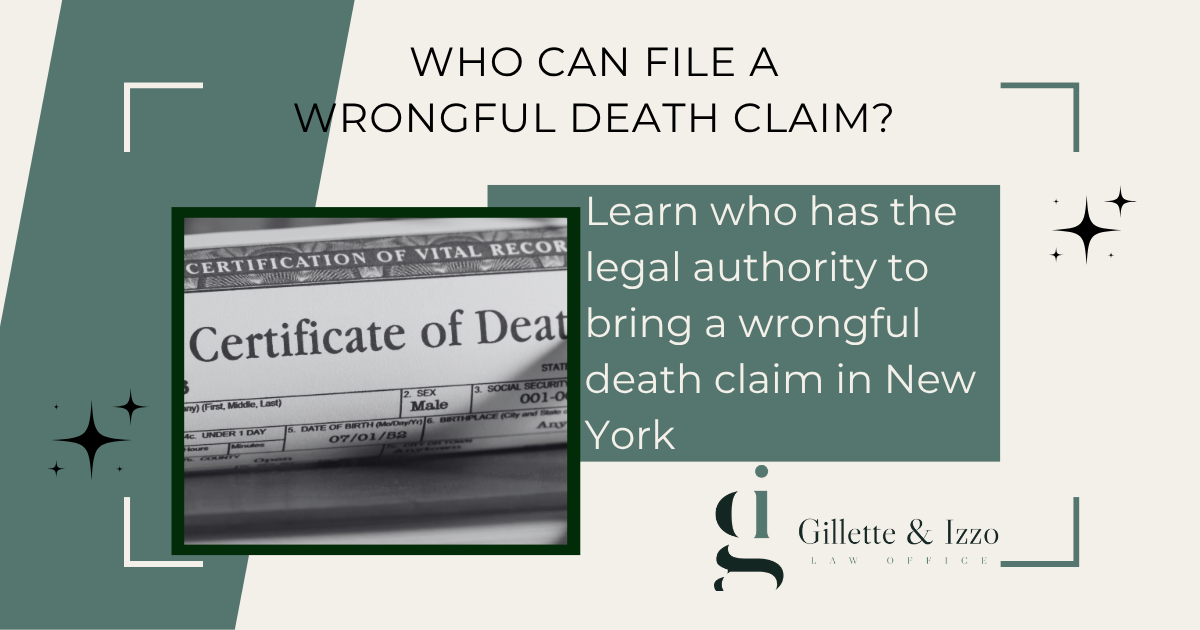
Understanding who can file a wrongful death claim in New York is an important part of navigating the legal process after a loss. Many people assume that close family members can file a claim directly, New York law follows a more structured approach.
In New York, a wrongful death claim must generally be brought by the personal representative of the deceased person’s estate. Understanding how this process works can help families avoid confusion and take appropriate steps when they are ready.
It is also important to note that wrongful death claims have their own statute of limitations. Many wrongful death cases also involve personal injury or medical malpractice claims. Each claim may have its own statute of limitations. The statute of limitations for a wrongful death claim in New York is generally two years from the date of death. However, multiple legal deadlines may apply depending on the circumstances. In addition, a personal representative must first be appointed by the Surrogate’s Court. That appointment requires its own legal process before a wrongful death lawsuit can generally be filed. Because these timelines can be complex, speaking with an attorney as early as possible is often beneficial.
Who Is Legally Allowed to File a Wrongful Death Claim?
In New York, wrongful death claims are generally filed by the personal representative of the deceased person’s estate. This individual may be named in a will or appointed as the administrator by the court. Being named as the executor in a will does not, by itself, provide the legal authority to file a wrongful death lawsuit. The executor or administrator must first be formally appointed by the Surrogate’s Court before acting as the estate’s personal representative.
This structure is outlined under New York Estates, Powers and Trusts Law § 5-4.1, which governs how wrongful death claims are brought in New York.
What Is a Personal Representative?
A personal representative is responsible for managing the legal and financial matters of the estate. In the context of wrongful death claims, this person typically oversees the filing and administration of the claim.
In many situations, the personal representative may be a spouse or close family member. However, the role is defined by legal appointment rather than relationship alone. Because of this, only the appointed individual has the authority to act on behalf of the estate.
How Is a Personal Representative Appointed?
The appointment process generally takes place through Surrogates’ Court in New York. If the deceased person had a will, the named executor is often appointed to serve in this role, but again must still be appointed by the court.
However, if no will exists, the court may appoint an administrator. The Court considers family relationships and determines who is best suited to manage the estate. In many cases, the court appoints a close family member to serve as the administrator of the estate.
Because this step must occur before a claim is filed, it can directly affect how and when a wrongful death case begins.
Who May Benefit from a Wrongful Death Claim?
Although the personal representative files the claim, certain family members may benefit from any recovery. In New York, this often includes a spouse, children, or parents, depending on the circumstances.
New York law governs how any recovery is distributed. The Court ultimately determines or approves those distributions. Because of this, understanding how these rules apply can help set realistic expectations.
Common Misunderstandings About Filing a Claim
There are several common misconceptions about who can file a wrongful death claim in New York.
First, many people assume that any immediate family member can file a claim directly. However, as discussed earlier, the claim is generally filed by the personal representative appointed by the Surrogate’s Court.
Second, some believe the process begins automatically after a death. In reality, legal steps must be taken before a claim can move forward.
Finally, some people think that multiple family members can file separate claims. In most cases, the claim is handled through the estate, not individual filings.
How This Connects to Wrongful Death Claims
Understanding who can file a claim is only one part of the broader legal picture. It is also important to determine whether the circumstances meet the legal definition of wrongful death.
For a more detailed explanation, read our article on what qualifies as wrongful death in New York, which explains the legal elements that may be considered.
In addition, our Wrongful Death Practice Area page provides a broader overview of how these cases are handled.
When These Claims Involve Medical Malpractice
In many cases, wrongful death claims arise from medical care. When a healthcare provider fails to meet accepted standards of care, the result may involve both medical malpractice and wrongful death law. This is especially true when the negligence leads to a fatal outcome.
To better understand how these claims overlap, our article on medical malpractice wrongful death in New York explains how negligence in a medical setting may lead to a wrongful death claim.
You can also explore our Medical Malpractice in New York page for additional context.
Why Understanding Your Role Matters
Knowing who can file a wrongful death claim in New York can help families better understand the process and take appropriate steps when they are ready.
While the legal process may seem complex, understanding the structure can provide clarity and direction. In many cases, having accurate information early can make the process more manageable.
Conclusion
Wrongful death claims involve more than determining what happened. They also require understanding who has the legal authority to act on behalf of the estate.
By understanding who can file a wrongful death claim in New York, families can better prepare for the steps ahead and make informed decisions during a difficult time.
To learn more about our attorneys, visit our Team page.
If you have questions about who can file a wrongful death claim or would like to discuss your situation, contact our office to speak with an attorney.