What Is Wrong-Site Surgery?
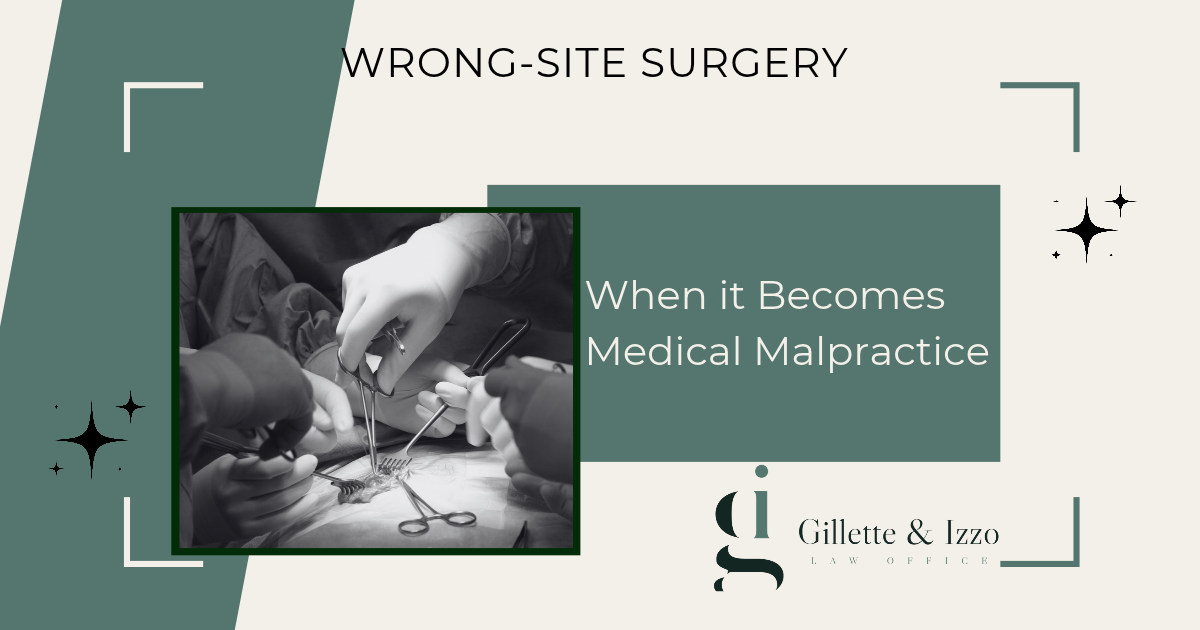
Wrong-site surgery occurs when a surgical team operates on the wrong body part, performs the wrong procedure, or operates on the wrong patient.
Although these incidents are often discussed together, they actually include several different types of surgical mistakes.
For example, a surgeon might remove a healthy left kidney instead of the diseased right kidney. In other cases, a surgeon might perform a procedure that the patient did not need. Identification failures can also lead a surgical team to operate on the wrong patient.
The medical community refers to these serious patient safety incidents as “never events,”. Proper safety protocols aim to prevent these mistakes.
Modern medicine has developed multiple safeguards to help surgical teams identify and prevent these errors before making an incision.
Why Wrong-Site Surgery Is Considered a “Never Event”
Healthcare organizations have spent decades developing standardized procedures to reduce preventable surgical errors. One of the most important patient safety initiatives is the Universal Protocol, which the Joint Commission developed.
The Universal Protocol requires surgical teams to complete several critical safety checks before an operation begins. Team members must confirm the patient’s identity, verify the planned procedure, and review relevant medical records and imaging. They must also mark the correct surgical site when appropriate and conduct a formal “time out” before making an incision.
During the time out, the surgical team pauses to confirm the correct patient, procedure, and surgical site. Every team member has an opportunity to raise concerns before the operation begins. This pause serves as a critical safety check in modern operating rooms.
Research has consistently shown that standardized surgical checklists reduce preventable medical errors and improve patient safety. The Universal Protocol remains one of the primary defenses against wrong-site surgery in hospitals and surgical centers. The World Health Organization’s Surgical Safety Checklist offers another widely used approach to improving surgical safety.
How Can Wrong-Site Surgery Still Happen?
Many people assume that a mistake this significant must involve one careless individual. In reality, wrong-site surgery is usually the result of multiple breakdowns throughout a patient’s care.
Healthcare providers rely on communication that begins well before the patient enters the operating room. Physicians, nurses, surgical schedulers, anesthesiologists, radiologists, and operating room staff must share accurate information. When communication breaks down at any point, the risk of error increases.
For example, a patient’s medical record may contain conflicting information about which side of the body requires surgery. Staff members might incorrectly label or interpret diagnostic images. A surgeon may rely on outdated documentation instead of reviewing the latest imaging studies. Staff might also fail to mark the correct surgical site or accidentally obscure the marking during surgical preparation.
Communication failures also play a significant role when healthcare team members do not share important information accurately. We discuss this issue further in our article about medical staff miscommunication.
Operating rooms are fast-paced environments where staff may schedule multiple procedures throughout the day. Staff changes, fatigue, distractions, production pressures, and assumptions can all contribute to preventable mistakes.
Perhaps most concerning is the failure to follow established safety procedures. Many wrong-site surgery cases occur because surgical teams skip safety protocols or fail to perform them correctly.
The Consequences for Patients
For patients, wrong-site surgery is far more than a medical mistake. It often changes the course of their lives.
Some patients undergo an unnecessary operation on a healthy body part. They may then need a second surgery to address the original medical condition. These additional procedures can increase medical expenses, prolong recovery, and expose patients to further complications.
Other patients experience permanent disabilities. Removing the wrong organ, operating on the wrong joint, or performing an unnecessary amputation can cause lifelong physical limitations. In the most tragic cases, preventable surgical errors may cause a patient’s death. Surviving family members may then have grounds to pursue a wrongful death claim.
The emotional impact can be equally significant. Many patients lose confidence in the healthcare system after experiencing a preventable surgical error. Some experience anxiety, depression, post-traumatic stress, or fear of future medical treatment.
Family members may also face emotional and financial hardship. Loved ones might become caregivers, miss work, or struggle with unexpected expenses while helping an injured family member recover.
When these errors occur, the effects often extend far beyond the operating room.
Is Wrong-Site Surgery Medical Malpractice?
Not every poor medical outcome is considered medical malpractice. Understanding the difference between an unavoidable complication and negligence is an important part of evaluating any claim. Surgery carries known risks, and complications can occur even when healthcare providers deliver appropriate care.
Wrong-site surgery, however, is different.
Because multiple nationally recognized safety standards exist specifically to prevent these events, operating on the wrong body part, performing the wrong procedure, or operating on the wrong patient frequently raises serious questions about whether the accepted standard of care was violated.
Determining whether medical malpractice occurred requires a careful review of the medical records, surgical documentation, consent forms, imaging studies, hospital policies, and expert medical opinions.
In many cases, investigators seek to understand where the safety process failed. Was the surgical site marked correctly? Was the required time out completed? Were diagnostic images reviewed? Did communication break down between members of the surgical team? Were established protocols ignored?
Common Examples of Wrong-Site Surgery
Although many people picture a surgeon operating on the wrong arm or leg, wrong-site surgery can take several forms. Some cases involve operating on the wrong side of the body, while others involve performing an entirely different procedure than the patient consented to receive.
For example, a patient scheduled to have surgery on the left knee may instead undergo surgery on the right knee. A surgeon may remove the healthy kidney instead of the diseased one or operate on the wrong level of the spine during back surgery. In other situations, the correct patient undergoes the wrong procedure because of a scheduling error or miscommunication about the surgical plan.
Wrong-patient surgery, while less common, can be especially devastating. These incidents occur when a patient receives a procedure that was intended for someone else because identification protocols failed. Even with barcode systems, electronic medical records, and multiple verification steps, errors can occur if established safeguards are ignored or rushed.
Spinal surgery presents unique challenges because identifying the correct vertebral level can be complex. Surgeons often rely on imaging during the procedure to confirm they are operating at the intended location. Failing to properly verify spinal levels has resulted in patients undergoing surgery at the wrong location, leaving the original condition untreated while creating new injuries.
Each of these situations represents a serious breakdown in patient safety. Although the specific circumstances differ, they all share one common feature: they are considered preventable.
Answering these questions is often essential to determining whether negligence contributed to the patient’s injuries.
Who May Be Responsible?
When a wrong-site surgery occurs, responsibility does not automatically rest with a single healthcare provider.
Modern surgery is a team effort involving physicians, nurses, anesthesiologists, surgical technologists, radiology staff, and hospital administrators. Every member of the team has a role in confirming that the correct patient receives the correct procedure at the correct location.
Depending on the circumstances, liability may involve the surgeon, members of the operating room staff, the hospital or surgical center, or multiple parties working together. An investigation may examine whether the surgeon properly reviewed imaging studies, whether nurses completed required verification procedures, whether documentation contained conflicting information, or whether hospital policies were followed.
Hospitals also have a responsibility to establish systems that reduce preventable medical errors. If those systems are inadequate or staff members are not properly trained to follow established safety protocols, institutional failures may contribute to a patient’s injuries.
Because every case is unique, determining responsibility often requires a detailed review of medical records, operating room documentation, hospital policies, witness statements, and expert medical opinions.
How Are Wrong-Site Surgeries Investigated?
When a wrong-site surgery is discovered, healthcare facilities are expected to conduct an internal investigation to determine how the error occurred and how similar events can be prevented in the future.
Many hospitals perform what is known as a root cause analysis. Rather than focusing solely on an individual provider, this process examines the systems and circumstances that contributed to the error. Investigators may review scheduling records, surgical consent forms, imaging studies, operating room documentation, communication among staff members, and compliance with safety procedures.
The goal is to identify every point where safeguards failed. Resources from the Agency for Healthcare Research and Quality have also emphasized the importance of analyzing system failures to improve patient safety.
Questions commonly include whether the surgical site was marked correctly, whether the required time out occurred, whether staff members voiced concerns, and whether anyone recognized conflicting information before the procedure began.
While these investigations are intended to improve patient safety, they do not replace an independent legal review. Patients and families often benefit from having experienced legal counsel obtain and evaluate the medical records with the assistance of qualified medical experts.
How Wrong-Site Surgery Can Affect Every Aspect of a Person’s Life
The physical injury caused by a preventable surgical error is often only the beginning.
Many patients require additional surgeries to correct the mistake or to finally perform the procedure that should have been completed in the first place. Recovery periods become significantly longer, requiring more time away from work and normal daily activities.
Some individuals are left with permanent pain, reduced mobility, loss of organ function, chronic nerve damage, or permanent disability. Others face years of rehabilitation that could have been entirely avoided.
The emotional consequences can be equally profound. Patients often describe feeling betrayed by the healthcare professionals they trusted. It is not uncommon for individuals to develop anxiety before future medical appointments or to delay needed treatment because they fear another preventable mistake.
Family members frequently experience significant emotional stress as well. A spouse, child, or parent may suddenly become a caregiver while also managing financial pressures caused by lost income and mounting medical bills.
These consequences can continue long after the surgical wounds have healed.
What Should You Do If You Believe a Wrong-Site Surgery Occurred?
If you believe you or a loved one underwent surgery on the wrong body part, received the wrong procedure, or experienced another preventable surgical error, it is important to gather information as soon as possible.
Medical records, operative reports, imaging studies, pathology reports, discharge summaries, and follow-up records often provide important details about what occurred. Because healthcare facilities maintain records according to their own retention policies, requesting copies sooner rather than later can be beneficial.
It is also important to avoid assuming that an unexpected outcome automatically means malpractice occurred. Surgical complications sometimes happen despite appropriate medical care. A thorough review by qualified medical experts is often necessary to determine whether the accepted standard of care was violated.
Speaking with an attorney experienced in medical malpractice can help you better understand the facts of your situation, preserve important evidence, and evaluate whether additional investigation is appropriate.
How Gillette & Izzo Law Office Can Help
Medical malpractice cases involving surgical errors are among the most medically and legally complex cases in New York.
Successfully investigating these claims often requires obtaining thousands of pages of medical records, consulting highly qualified medical experts, reviewing hospital policies and surgical protocols, and carefully analyzing every decision made before, during, and after surgery.
At Gillette & Izzo Law Office, we understand that patients who contact us are often looking for answers as much as they are seeking legal guidance.
Our role is to carefully evaluate the circumstances surrounding your medical care, explain the legal process in understandable terms, and help determine whether the evidence supports a medical malpractice claim. This often begins with reviewing whether the care you received may have involved negligent medical treatment. If negligence caused preventable harm, we work to pursue accountability while helping clients understand each step of the process.
Every case is unique, and every individual deserves to have their concerns taken seriously.
If you or someone you love has been injured because of a preventable surgical error, we encourage you to contact our office to discuss your situation.
Frequently Asked Questions
How often does wrong-site surgery occur?
While wrong-site surgery is uncommon compared to the millions of procedures performed each year, it continues to happen despite decades of patient safety initiatives. Because some incidents may not be publicly reported, the exact number is difficult to determine. Even one occurrence is considered unacceptable because these events are largely preventable through established safety protocols.
Is wrong-site surgery always considered medical malpractice?
Not automatically. A successful medical malpractice claim requires showing that a healthcare provider failed to meet the accepted standard of care and that this failure caused injury. Because wrong-site surgery is considered a “never event,” these cases often warrant careful legal and medical review.
Can hospitals be responsible for wrong-site surgery?
Yes. Depending on the circumstances, responsibility may extend beyond the surgeon to include hospitals, surgical centers, nurses, or other members of the surgical team if system failures or protocol violations contributed to the error.
What compensation may be available?
Every case is different. Depending on the facts, compensation may include medical expenses, future medical care, lost wages, diminished earning capacity, pain and suffering, and other damages recognized under New York law.
How long do I have to file a medical malpractice claim in New York?
New York law generally imposes strict deadlines for filing medical malpractice claims, and there are exceptions that may affect the applicable time limits. Because these deadlines can vary based on the facts of a case, it is important to speak with an attorney as soon as possible.
Conclusion
Wrong-site surgery represents one of the clearest examples of a preventable medical error. Patients place tremendous trust in their healthcare providers, and the systems designed to protect them exist for a reason. When those systems fail, the consequences can be life-changing.
Although no legal action can erase what happened, understanding how the error occurred can provide answers and, in some cases, accountability.
Our attorneys regularly investigate cases involving medical malpractice, including allegations of preventable surgical errors, delayed diagnosis, and other forms of negligent medical treatment.
If you or someone you love believes they were harmed by a preventable surgical error, speaking with an experienced medical malpractice attorney can help you understand your legal options and determine whether further investigation is appropriate.
If you have questions about a potential medical malpractice claim, contact Gillette & Izzo Law Office to discuss your situation with our team.