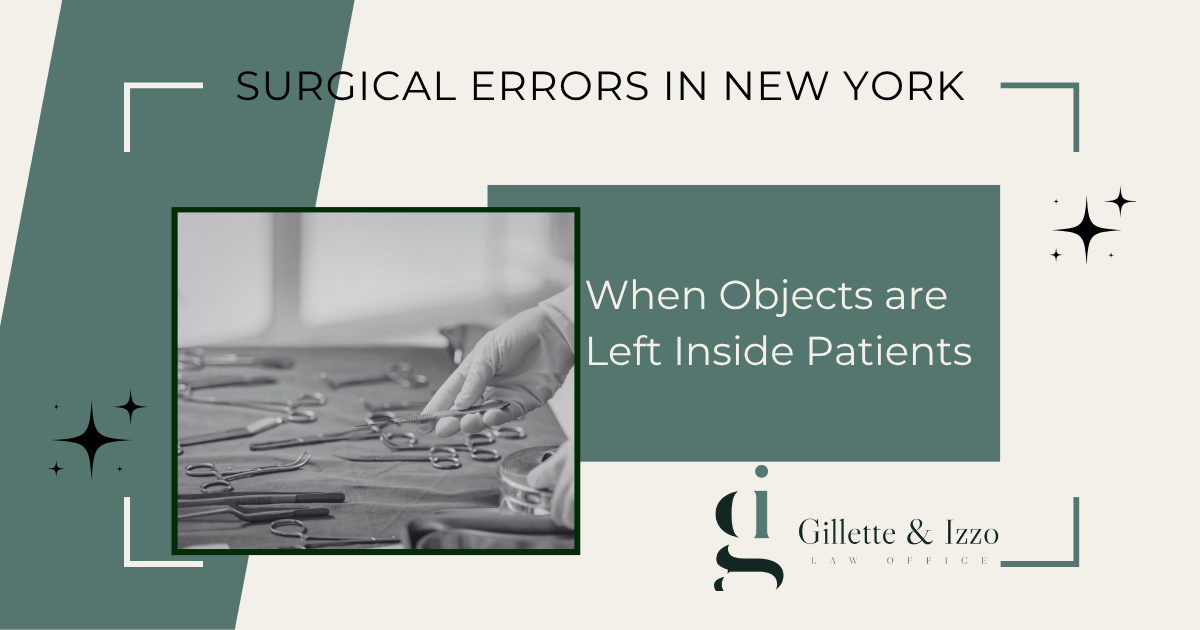
Patients trust surgical teams to perform procedures safely and carefully. In most cases, surgeries are completed without complications. However, one of the most serious and preventable medical errors occurs when surgical objects are left inside patients in New York, which is a recognized form of surgical errors and medical malpractice.
These incidents, often referred to as retained surgical objects or foreign object cases, can lead to severe complications, additional surgeries, and long-term health consequences. Understanding how these errors happen can help patients recognize when something may have gone wrong during their care.
What Are Retained Surgical Objects?
Retained surgical objects are items unintentionally left inside a patient’s body after a surgical procedure. These objects can include sponges, surgical instruments, towels, laparotomy pads, needles, or other materials used during surgery.
Because surgical teams are required to account for all tools and materials before completing a procedure, these errors are widely considered preventable.
When surgical objects are left in patients in New York, the consequences can be serious and may raise concerns about whether proper safety protocols were followed.
How These Errors Occur
Although strict procedures are in place to prevent retained surgical objects, errors can still occur when systems break down.
In many cases, these incidents are linked to communication failures among members of the surgical team. For example, incorrect counts of surgical tools or sponges may go unnoticed if team members do not verify information carefully.
These errors may also occur when surgical protocols are not strictly followed by members of the surgical team.
In other situations, emergency procedures or unexpected complications may disrupt normal protocols, increasing the risk that an object is overlooked.
The Agency for Healthcare Research and Quality identifies communication breakdowns and failures in safety processes as key contributors to preventable surgical errors.
The Serious Risks to Patients
When surgical objects are left inside patients in New York, the body may react quickly or symptoms may develop over time.
Patients may experience pain, infection, swelling, or internal bleeding. In some cases, retained objects can damage organs or lead to life-threatening complications.
Because these objects are not meant to remain in the body, many patients require additional surgery to remove them. This can lead to extended recovery times, increased medical costs, and emotional distress.
How Often Do These Errors Happen?
Although retained surgical objects are considered rare, they occur more often than many patients realize.
Studies have shown that thousands of surgical items are left behind in patients across the United States each year. Patient safety data also suggests that these events are consistently identified as “never events,” meaning they should never occur when proper procedures are followed.
In New York, hospitals are required to report certain serious patient safety incidents, including retained foreign objects. These reporting requirements help track how often these events occur and highlight the importance of strict surgical safety standards.
The New York State Department of Health provides information on patient safety and hospital reporting practices.
Why These Errors Are Considered Preventable
Medical professionals follow strict protocols designed to prevent retained surgical objects. These protocols typically include counting all instruments and materials before, during, and after surgery.
Surgical teams may also use technologies such as tracking systems or imaging tools to ensure that nothing is left behind.
When these safeguards are not properly followed, the risk of error increases significantly. It is also common for surgeons to use items, such as towels, during surgeries that are not on the count sheet beforehand. When the surgeon fails to follow proper procedure and protocols for announcing the use of a new object, or the staff fails to correctly include it in the count foreign object cases can occur. Because clear procedures exist to prevent these mistakes, retained surgical objects are viewed as avoidable incidents.
When a Surgical Error May Lead to a Malpractice Claim
Not every surgical complication results from negligence. However, when an object is left inside a patient, that is not meant to be left in the patient (like sutures, clips, etc.) the situation may raise serious concerns about whether the standard of care was followed.
In many cases, these incidents may support a medical malpractice claim because the error involves a failure to follow basic safety procedures.
Patients who experience complications after surgery may benefit from reviewing their medical records and understanding what occurred during the procedure.
Related Surgical Error Cases
Retained surgical objects are one type of preventable surgical error. Other forms of surgical negligence can also lead to serious harm.
For example, improper placement of surgical hardware may result in nerve damage or long-term complications. Learn more in our article on spinal surgery errors and medical malpractice.
In addition, complications during certain procedures may occur when surgical techniques are not properly followed. Our article on surgical errors during gastric bypass procedures explains how serious injuries can result from mistakes during surgery.
What Patients Should Watch For After Surgery
After a surgical procedure, patients should pay close attention to their recovery and any unusual symptoms.
Persistent pain, unexplained swelling, fever, or signs of infection should always be evaluated by a medical professional. If symptoms do not improve or worsen over time, it may be important to seek further medical attention.
Being proactive about your health can help identify potential issues early and reduce the risk of serious complications.
Speak With a New York Medical Malpractice Attorney
If you believe a surgical error may have occurred, you may have questions about your options.
The attorneys at Gillette & Izzo Law Office represent individuals and families harmed by medical negligence throughout New York.
Contact our office today to schedule a free consultation and learn more about your rights.